Medical Toxicology Expert Witness
Vident Partners provides vetted medical toxicology expert witnesses for cases involving overdose and poisoning, opioid prescribing, drug interactions, chemical and carbon monoxide exposure, and cause of death in drug-related cases nationwide. Request a referral today.
Find a Medical Toxicology Expert →Overview
About Medical Toxicology Expert Witnesses
A medical toxicologist decides what a substance did to this person. That means sorting out what was taken or inhaled, how much, when, and whether it explains the symptoms or the death. The field sits between the bedside and the laboratory. Unlike a laboratory toxicologist, a medical toxicologist is a physician who treats poisoned patients, so the opinion combines dose, timing and clinical signs.
This page covers the physician. A forensic toxicologist addresses laboratory testing and impairment in criminal cases. An environmental toxicologist addresses risk from community contamination. A pathologist determines cause of death, often relying on the toxicologist.
What the Expert Does in a Case
The expert builds an exposure timeline, then asks whether the person's course fits. The file usually includes emergency and hospital records, poison center calls, pharmacy fills, prescription monitoring data, autopsy and laboratory reports, and any product data or workplace measurements. The expert separates what the laboratory proved from what can be inferred. A number in a report is not an answer until someone explains the sample type, when it was taken and what the person's tolerance was.
How Causation Is Argued
Toxic causation has an accepted structure. The Federal Judicial Center's Reference Manual on Scientific Evidence, Fourth Edition, published in March 2026, has reference guides on exposure science, epidemiology and toxicology, which judges use when they weigh this testimony 1. The manual notes that a differential diagnosis may support an opinion that an exposure caused the harm 1. The questions run in order. Could the substance cause this harm at all? Was this person's dose high enough? Were other causes considered and ruled out?
Death cases add their own problem. After death, drugs can move between tissues and blood. A 2023 review describes postmortem redistribution and notes that susceptibility is typically determined by the central blood to peripheral blood ratio 2. A level drawn from the heart may overstate what was in the body at death, so the source of the sample can change the opinion.
Opioids and Prescribing
Prescribers face civil and criminal exposure, and toxicologists are often asked about both. A prescription for a controlled substance must be issued for a legitimate medical purpose by a practitioner acting in the usual course of professional practice 3. In Ruan v. United States, the Supreme Court held that the "knowingly or intentionally" requirement of 21 U.S.C. 841 applies to the "except as authorized" clause, so the government must prove the physician's state of mind on that point 4.
The CDC's 2022 prescribing guideline is the usual reference in civil cases. It says its recommendations should not be applied as inflexible standards of care across patient populations 5. Experts on both sides should use that sentence honestly. A departure from the guideline is not automatically negligence. Following it does not end the inquiry.
Where the Fight Usually Is
- Dose reconstruction. How much was taken, when, and whether blood levels support it
- Tolerance. A level that would kill one person may not kill a long-term user
- Mixed drug deaths. Which of several substances caused the death, a question that can decide federal death-resulting sentencing and civil liability
- Clinical management. Whether antidotes, decontamination or admission were timely
- Chemical exposures. Whether symptoms fit the substance and the dose, or whether something else explains them
- Drug interactions. Whether a combination was foreseeable and should have been monitored
Background
Board certification in medical toxicology is granted by ABEM, ABP, or ABPM, three co-sponsoring ABMS member boards, after completion of a two-year ACGME-accredited fellowship 78. The ABMS formally recognized medical toxicology as a subspecialty in 1993, when the American College of Medical Toxicology (ACMT) was also founded 9. Demand for medical toxicologists has surged due to Department of Justice fentanyl prosecution initiatives and the opioid crisis. Most medical toxicologists are dual-boarded in emergency medicine, providing broad clinical expertise. Medical toxicology fellowships are approved by the ACGME and consist of two years of training; candidates must pass the board exam co-sponsored by ABEM, ABP, and ABPM.
Who Is Qualified
ABMS lists Medical Toxicology as a subspecialty certificate under the American Board of Emergency Medicine, the American Board of Pediatrics and the American Board of Preventive Medicine 6. The route is fellowship training after a primary specialty. Look for a physician who treats poisoned patients or works with a poison center, who has seen the substance at issue, and who will not push a number further than the data allows. For drug testing methods and chain of custody, pair the physician with a forensic toxicologist.
Federal opioid guidance says its recommendations should not be applied as inflexible standards of care across patient populations.
Case Types
Common Case Types
Drug overdose and medication poisoning
Opioid prescribing, civil and criminal
Cause of death in mixed drug cases
Carbon monoxide and gas exposures
Heavy metal and chemical exposures
Drug interactions and adverse drug reactions
Management of poisoning in emergency departments
Workplace chemical exposure injury
Fentanyl-related death prosecution and defense
Drug overdose causation and manner of death
Occupational and environmental chemical exposure
Carbon monoxide and industrial poisoning cases
Qualifications
Qualifications to Look For
- Subspecialty certification in Medical Toxicology through ABEM, ABP or ABPM
- Fellowship training in medical toxicology
- Clinical care of poisoned patients or poison center experience
- Experience with the substance at issue
- Ability to explain dose, tolerance and timing plainly
- Knowledge of how the reference manual frames causation
- Prior deposition or trial testimony on causation
- Active clinical practice including poison center or toxicology consultation service
Related Specialties
Related Expert Specialties
Vident Authority Network
The Synthetic Opioid Project
Pharmacology, toxicology, and causation — sourced to primary literature. Medical Toxicology is one of the disciplines this Center covers. A research project of Vident Partners.
Explore The Synthetic Opioid Project →Featured Expert
A Vident Partners Expert in Medical Toxicology
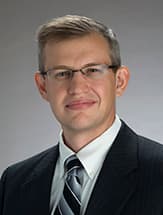
Stephen L. Thornton, M.D., FACEP
Medical Director, Kansas Poison Control Center · Associate Professor, University of Kansas
A triple board-certified physician leading the Kansas Poison Control Center, with 95 peer-reviewed publications, 1,100+ citations, and 31+ documented expert witness cases for both plaintiff and defense.
View full profile →FAQ
Frequently Asked Questions
What qualifications should a medical toxicology expert witness have?
Look for a physician with subspecialty certification, fellowship training and direct care of poisoned patients. Experience with the substance at issue matters most.
What is the difference between medical and forensic toxicology?
A medical toxicologist is a physician who treats patients and addresses clinical effects. A forensic toxicologist usually works from the laboratory and addresses testing and interpretation.
Is a blood level enough to prove a fatal overdose?
Not on its own. Tolerance, other substances, the sample site and postmortem changes all matter, so the expert has to explain the number in context.
Does the CDC opioid guideline set the standard of care?
The CDC says its recommendations should not be applied as inflexible standards of care. It is important evidence of accepted practice, but the opinion must fit the patient and the date of care.
What did Ruan v. United States change for physicians?
The Supreme Court held that the government must prove a prescriber's knowledge or intent that the prescribing was unauthorized. It concerned the criminal statute, not civil negligence.
What is the difference between medical toxicology and forensic toxicology?
Medical toxicologists are physicians who treat poisoned patients and provide clinical opinions on causation and injury. Forensic toxicologists are laboratory scientists who analyze biological specimens for drugs and chemicals. Both may testify as experts, but medical toxicologists address clinical causation while forensic toxicologists address analytical methodology.
Why is there high demand for medical toxicology experts in fentanyl cases?
The Department of Justice has prioritized fentanyl distribution prosecution, creating significant demand for medical toxicology experts who can opine on cause of death, drug interactions, lethal dose thresholds, and the distinction between fentanyl as a prescribed medication versus illicit substance.
How much does a medical toxicology expert witness cost?
In general, medical expert fees are determined by the expert themselves, based on a variety of criteria. Among those criteria are clinical experience, forensic experience, academic qualifications such as Fellowships, clinical settings, and publications. Vident does have some influence over expert fees by comparing experts within a specialty, but ultimately it is a personal decision by the expert.
Related Insights
Research & Analysis
What is a Medical Toxicologist?
“What exactly is a medical toxicologist?” I have been asked this question by physicians and attorneys alike. The technical answer is that medical toxicology is a subspecialty officially recognized by...
Practice Area IntelligenceEmergency Medicine & Medical Toxicology Expert Witness
Dr. Stephen L. Thornton is one of our top experts specializing in emergency medicine and medical toxicology. He consistently receives the highest praise from both plaintiff and defense attorneys. Dr....
Practice Area IntelligenceThe difference between MD toxicologists and PhD toxicologists.
Toxicology is the study of the adverse effects of chemical substances on living organisms, including humans. Toxicologists investigate the mechanisms of toxic effects, evaluate the risks and benefits...
Sources
References & Data Sources
- Federal Judicial Center, Reference Manual on Scientific Evidence, Fourth Edition, Volume II (March 2026)
- Abdelaal GMM et al., Postmortem redistribution of drugs: a literature review (PMC)
- 21 CFR 1306.04, Purpose of issue of prescription (eCFR)
- Ruan v. United States, No. 20-1410 (U.S. 2022) (Cornell LII)
- CDC Clinical Practice Guideline for Prescribing Opioids for Pain, United States, 2022
- ABMS, Specialty and Subspecialty Certificates
- ACMT, Becoming a Medical Toxicologist
- ABEM, Medical Toxicology Subspecialty Certification
- ACMT, About ACMT
Need a Medical Toxicology Expert Witness?
Vident Partners connects attorneys with qualified medical toxicology expert witnesses. Complimentary consultation, 24-hour turnaround, no obligation.
Request an Expert →